Resources
Colt Group Industrial Leak Repair > White Papers > Hot Tapping Explained: What It is and How to Use It


Pipeline systems rarely get the luxury of downtime—especially when they deliver essential services like water and sewer. For utilities, municipalities, and industrial facilities, shutting down an entire line can mean costly disruptions and community impact. That’s where hot tapping, sometimes called live tapping, becomes invaluable.
Hot tapping allows crews to connect to a pressurized pipeline without interrupting service. It’s a safe and proven technique for adding new branches, monitoring points, or tie-ins to existing systems—all while the line stays live. In municipal water systems, hot tapping is often used to add monitoring ports or valve assemblies without interrupting service.
At Colt we use hot tapping to help clients expand, upgrade, or repair infrastructure efficiently and safely, minimizing downtime while maintaining flow.
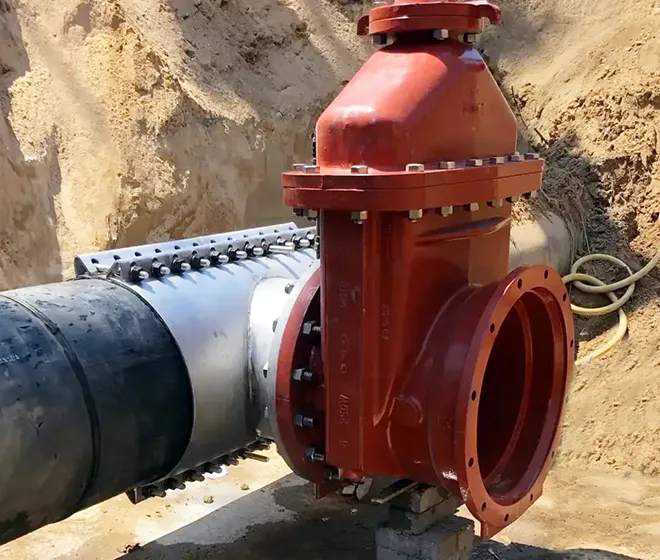
Hot tapping is the process of making a new connection on an active, pressurized pipeline without taking it out of service. Crews use a specially designed fitting, valve, and tapping machine that allow them to cut into the pipe while maintaining full control of pressure and flow. Here’s how it works:
This process avoids draining or depressurizing the system, allowing new tie-ins to be made safely while the line remains operational.
The difference between hot tapping and cold tapping comes down to pressure. Cold tapping follows the same basic steps but is done on a depressurized or inactive line. Hot tapping, by contrast, maintains internal pressure and continuous service throughout the entire operation—making it ideal for live systems that can’t be shut down. For a detailed technical explanation, the EPA’s Pipeline Hot Taps guidance outlines how this process is used safely in pressurized pipeline work.
Hot tapping is used whenever maintaining service flow is critical. Applications include:
Because the system stays pressurized, these connections can be made without disrupting service—a major benefit for municipalities, hospitals, and manufacturing facilities.

Hot tapping offers major advantages for utilities and infrastructure operators:
Hot tapping can be performed on most common pipeline materials, including:
MATERIALS:
COMPATIBLE WITH:
The American Water Works Association (AWWA) Manual M44 notes hot tapping’s versatility for live water distribution networks from 2-inch laterals to large-diameter mains.
Some pipe types, like Prestressed Concrete Cylinder Pipe (PCCP), require specialized inspection and repair techniques rather than standard hot tapping.

Although hot tapping and line stopping are often mentioned together, they serve distinct purposes:
In many projects, they work hand-in-hand: a hot tap may first install the valve that allows a line stop to be performed safely later on.
Colt’s hot tapping (or wet tapping) services allow facility operators and civil engineers to make new branch connections, insert sensors, or expand lines under live operating conditions without depressurizing the system, purging lines, or causing operational downtime. Colt performs safe, precise, and efficient hot tapping services for water, sewer, and industrial pipeline systems. We use industry-standard fittings and equipment designed specifically for under-pressure connections, following the same proven practices established by leading manufacturers such as Mueller Co. and T.D. Williamson.
Every tap is engineered for the system’s pressure, diameter, and material, ensuring quality and safety. We’ve completed live taps across a range of materials and sizes, helping municipalities and facilities expand infrastructure without costly shutdowns. You can learn more about Colt’s team on our About Us page.

Hot tapping allows utilities and facility managers to expand or modify their systems safely—without shutting down service. Whether adding new connections, monitoring points, or bypass lines, it’s one of the most efficient ways to maintain service continuity during upgrades or construction.
The Colt Group provides hot tap (hot tapping), wet tap (wet tapping), single line stopping, double line stopping, line stop with bypass, HTLS, line freezing, and valve insertion services across the country. Find us in the states listed below by visitng our Contact page or calling our national 24/7 hotline at 800.324.2658.
Alabama
Arizona
Arkansas
Colorado
Florida
Georgia
Idaho
Illinois
Kansas
Kentucky
Louisiana
Michigan
Minnesota
Mississippi
Missouri
Nevada
New Jersey
New Mexico
New York
North Carolina
North Dakota
Ohio
Oklahoma
Oregon
Pennsylvania
South Carolina
South Dakota
Tennessee
Texas
Utah
Virginia
Washington